
Resona by Minnie
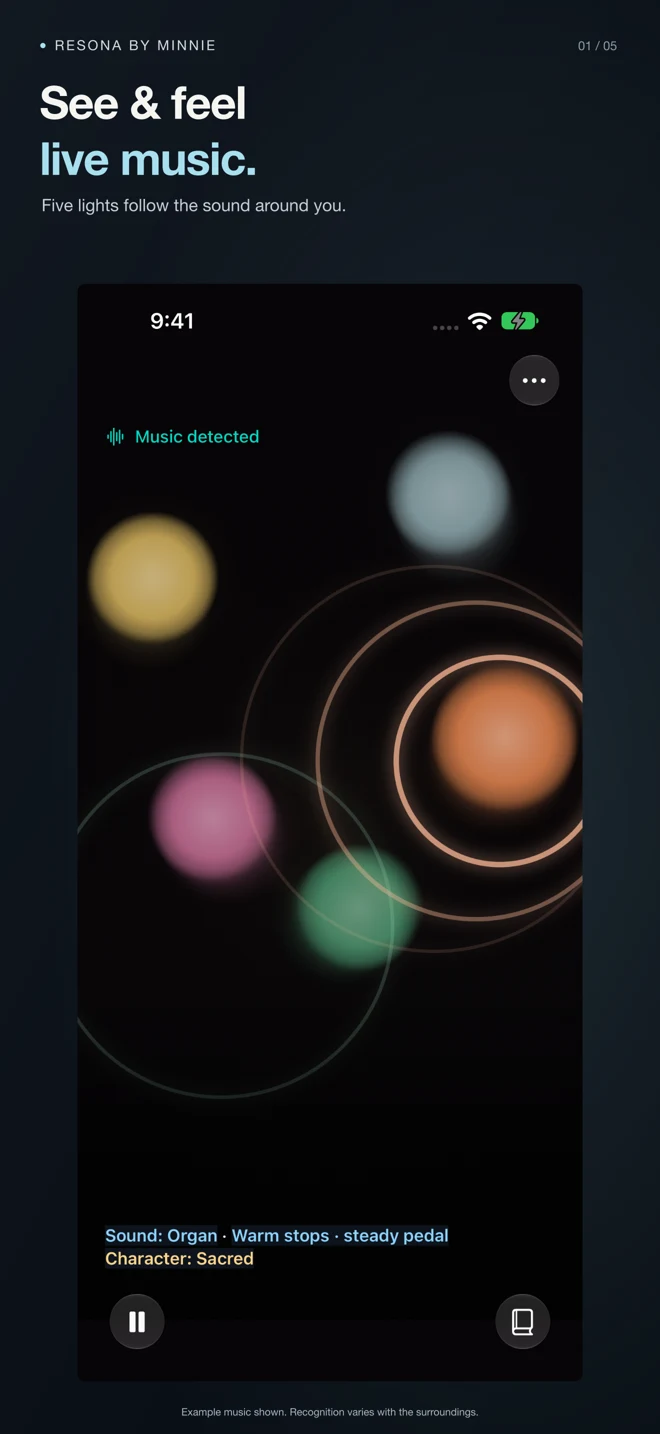
See & feel live music.
While playing the organ in churches, I noticed that some older members of the congregation struggled to hear the music they relied on to sing together. I wanted to offer another way to share that moment.
I designed Resona’s concept, musical experience and interactions, then used coding agents to help turn that design into a working app. Resona translates nearby music into five flowing lights, optional iPhone vibration and short on-device descriptions.

The current App Store listing uses the earlier name, Resona Lumen. The screenshots preview version 1.2, including the listening diary.
From signal to musical features.
A vDSP FFT pipeline extracts loudness, pitch and onsets, while SoundAnalysis identifies sound sources. Different analysis paths keep immediate movement separate from slower musical context.
Light and touch, working together.
Visual motion follows musical energy and register. Core Haptics combines sustained textures with light accents, while Calm Motion and adjustable vibration give the listener control.
AI from features, not recordings.
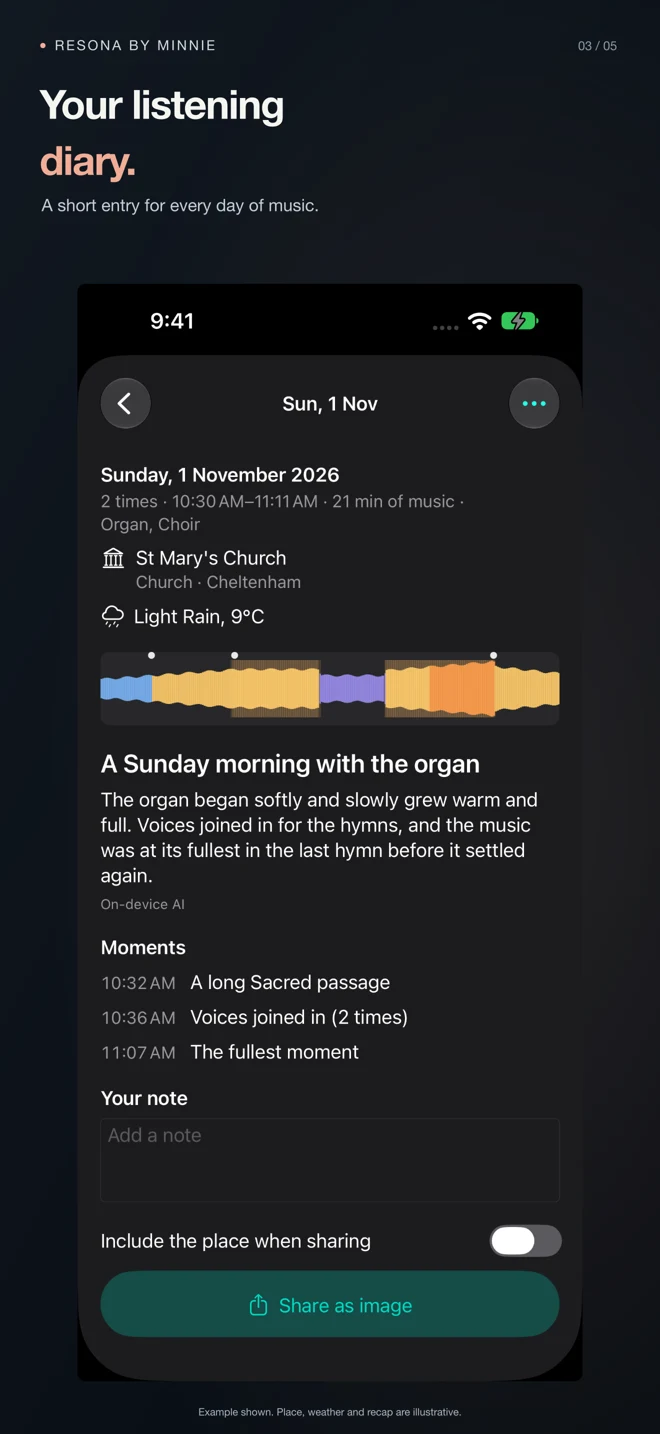
Optional Apple on-device AI turns derived musical features into short descriptions. Version 1.2 adds a local diary of colours and moments. Microphone audio is never recorded or uploaded.
Inside the engineering
My design, developed with coding agents
I led the product concept, musical mappings, interaction design and experience decisions. I used coding agents to help implement the app, iterating on the software around that design.
Designing for the room, not just the screen
The goal is a sense of being part of the music, rather than a note-for-note transcription. Source confidence and smoothing help avoid abrupt visual changes; the light experience remains available when optional AI or haptics are unavailable.
Working within device limits
An Energy Saver mode and a time-limited High Fidelity mode balance analysis and rendering work, with thermal protections and graceful fallbacks. Microphone analysis runs off the main UI thread; session handling prevents old results from appearing after listening stops.
Remembering without recording
The version 1.2 diary uses a local SwiftData database. Optional Core Location, MapKit and WeatherKit lookups add a place and weather summary with permission; the app does not store coordinates. Entries can be deleted or shared deliberately.
Testing the pipeline
The current development checks include 76 algorithm and event-delivery checks, 58 fixed WAV replay cases and 55 runtime checks. These help catch regressions; they do not establish accuracy on all real music or replace testing with listeners.